
Off Grid Montana Style
I found this post on Zero Hedge and thought I’d post it here. It’s by Brandon Smith from Alt-Market
Going Off Grid – Montana Style!
The concept of off-grid living is often encumbered by numerous false assumptions and associations. Many think that to delve into the lifestyle you must be either a grizzled anti-social mountain man, a pompous starry-eyed hippie, or, a criminal on the lam. The spectrum of characterizations range from “kooky” bunker building militia members to spoiled Al Gore worshipping vegan hipsters out to prove they are better than everyone else by reducing their “carbon footprint”. The point is, for the average television-fed American, the idea of off-grid life automatically conjures visions of the extreme.
I believe this reaction is due in large part to our society’s obsession with feeling “connected”. Ever challenge a friend or family member to go without touching their cell phone for a day? Ever ask them to shut off their TV and see if they can find other ways to occupy themselves? Ever ask them to leave modern conveniences behind, if only for a weekend, to take part in some simple camping? I can say that in my own experience, nine out of ten people will stare at you pale faced like you just kicked them square in the loins. For them, leaving behind the buzz of our make-believe culture is the same as stepping outside of time, or abandoning one’s very identity. The whole suggestion is alien.
Luckily, here in Montana, I’ve encountered far hardier souls than in most other places, and the pursuit of an existence disconnected from dependence on the system is not treated as quite so outlandish. In fact, many here have taken the leap into self-sufficiency and gone 100% off-grid. I was lucky enough to meet one of these pioneers recently, and take a tour of his farm, but what interested me most about him were his origins, which were rooted about as far away from his current environment as you can get…
Rich Scheben was once a highly respected sales associate in the world of big-pharma, who had spent much of his life in the urban landscape of New York. He received accolades for his performance working within titanic companies like Merck and Glaxo, but his dream had always been to pursue a career in forestry. Despite having a degree in the field as well as a long history participating in wilderness sports, he soon discovered that affirmative action quotas within state and federal institutions were stringent. His applications were passed up time and again while others with little to no experience or training were hired immediately because of their politically designated victim-status. The corporate world too was rife with people who climbed upwards on the efforts of more worthy employees, or who were given positions of prominence based on their willingness to schmooze with management, rather than work hard.
Finally, when Rich noticed troubling health difficulties creeping up on him, a fateful doctor’s visit revealed severe damage in his spinal column. The company immediately found out, and sidelined him.
These circumstances led Rich not only to question the structure and meaning of his efforts within the circus-like corporate framework, but to also question the structure and meaning of modern America. Today, he is an avid supporter of the Liberty Movement, a devout Constitutionalist, decidedly anti-corporate oligarchy, and even anti-big pharma. His day-to-day financial existence is built upon savings, sound money, and living below his means. His health habits have taken a 180 degree turn, and he is now subsisting on largely organic and home grown diet. Everything has changed.
Rich Scheben holding a bull trout caught in his backyard
In a beautiful corner of Northwest Montana, Mr. Scheben found a sizable plot of land to begin his off-grid adventure. He recommends varied terrain, rather than flat. The more rough the terrain, the more resources are generally available, and the more privacy you are usually afforded. With hills, valleys, gorges, and even a river, Scheben has an incredible array of land types at his disposal.
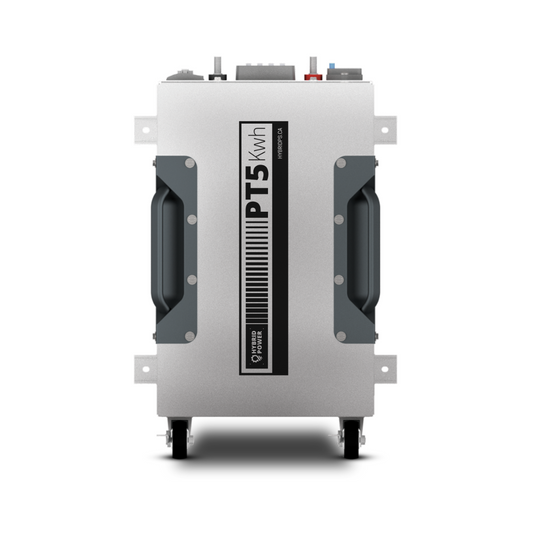
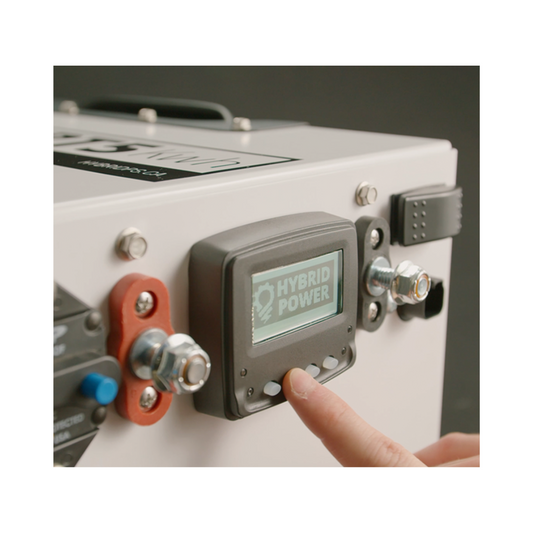
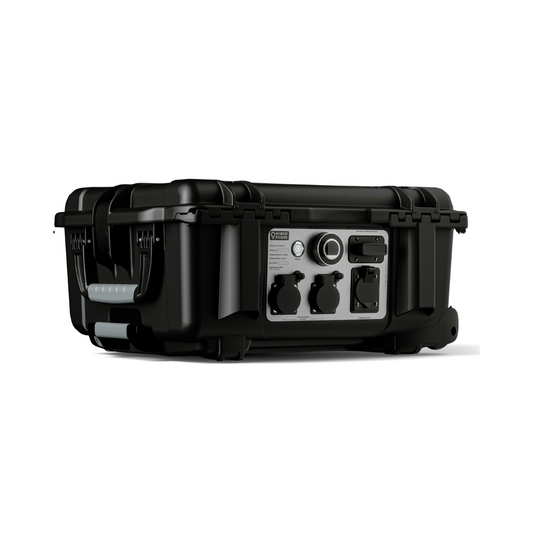
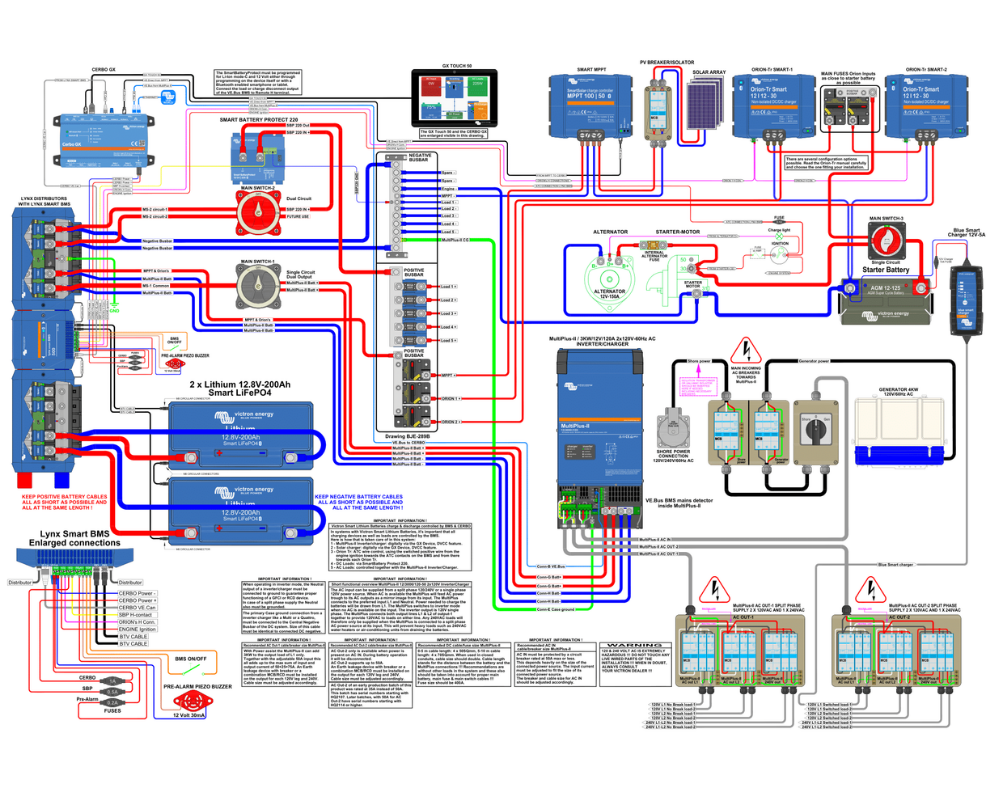
The main cabin is a straightforward structure without a lot of the elaborate design often seen in average suburban McMansions. Electricity is provided by a small solar array and a minimal battery bank. I have always said that it does not take much in terms of solar power in order to adequately supply an off-grid retreat or farm, and Rich’s system is a perfect example. With only four deep-cycle batteries charging on a minimal array, Rich is able to fulfill all his electricity needs.
The cabin itself is heated by a single wood stove, which is fueled by cords of wood from timber growing on Scheben’s land. Water is supplied by a well and pump, which is then hoisted to a large tank on the second floor. The tank uses gravity to feed the faucets on the first floor below. Bathroom cleaning is handled in a number of ways. Hot showers can be had using a solar shower filled and placed near the wood stove to warm. Water can be heated and poured into the bathtub. Relieving one’s self is handled in a good old fashioned out-house.
Scheben’s wood stove, which adequately heats his entire cabin
Though Rich still stocks bulk foods from town, his farm is completely capable of providing enough food that he would never have to leave if he so desired. His garden area is not immense, and can easily be worked by hand. In fact, it does not take much space at all to grow more than enough produce for a family if needed, and Scheben’s lifestyle proves that if every landowner used a corner of his yard for a garden, centralized farming and food production would disappear. Livestock rounds out the food necessities of Schebens farm, including chickens for meat and eggs, goats for milk and cheese, turkeys, etc. With land surrounded by Montana wilderness, wild game is abundant, and there is little to no chance of Scheben ever going hungry.
Scheben’s homemade greenhouse with bathtub for summer bathing
Wild elk roaming through Scheben’s property
One issue that is constantly raised when discussing Off-Grid living is that of cost. The problem is that so many people only consider the initial expenditures involved when diving into this new life, but never take into account the extreme SAVINGS involved after they have settled in. Scheben’s daily costs are next to nothing. His land provides nearly every essential imaginable, and the financial drain after setting up shop is minute in comparison to the average suburbanite. This is what preppers in the Liberty Movement need to understand when uncertain about the Off-Grid strategy. Ultimately, it is about providing for yourself for next to nothing what you once had to pay out the nose for!
Going off-grid also does not necessarily mean abandoning technology, and I was glad to see that Scheben felt the same way. He uses LED’s, not hurricane lanterns. He surfs the internet and keeps up with news events, instead of isolating himself in the backwoods from the concerns of the world. He rides ATV’s back and forth across his land, not horses (though horses are great if you can keep them). There is a serious misconception out there that going off-grid or living through a collapse will automatically necessitate a return to a pre-industrial 18th century type of existence. This is simply not so. The technological advances of today should be mixed and melded with the agricultural skills of yesterday. Neither should be hastily cast aside if we are to find balance once again in our culture.
In light of our current chaotic economic situation, as well as the potential for social breakdown, energy crisis, hyperinflation, freight disruption, and global war, the off-grid life is not just a hobby, but a valuable form of insurance. There may come a day when, whether we like it or not, we will all be forced to survive off-grid. Some will be prepared with the expertise required to make it work. Some will have at least a practical understanding of the methods and philosophies that drive decentralized and independent living. Others will not.
Frankly, if a former New York big-pharma salesman like Rich Scheben is able to wake up to the social catastrophe looming in our country’s future, and the extraordinary significance inherent in off-grid knowledge, then anyone can, and the dismissive excuses I hear so often from those who can’t wrap their heads around the importance of this step in the realm of survival, now tend to ring lazy and hollow…
My name is Rob Chipman and I’m a realtor, pilot and all around Curious George based in Vancouver, BC. I really enjoy flying, playing guitar and hockey, real estate and the Chilcotin. My company is Coronet Realty Ltd., located at 3582 East Hastings Street, Vancouver, BC, V5K 2A7. I have a C-150L that I own with two other pilots, based out of Pitt Meadows. Do not hesitate to contact me by email if I can help you do anything, especially if its likely to be interesting.
The Ultimate Wind Power ebook Guide + Turbine Reviews - Revised and Updated 2010 Edition -
Composting Toilets
Composting toilets are dry toilets – that is, they aren’t hooked up to traditional plumbing. The advantages are obvious. You don’t need a sewer or a septic system. You don’t need a water supply. In fact, if you’re living alone you don’t even need a separate room. Cabin, garage, treehouse. Put them anywhere you want.

They use an aerobic processing system that treats the poop by composting it. They do sometimes need a little water, but not much. Another benefit is that they produce compost which can be used to enrich the soil. From the point of view they make a nice closed system. Aerobic decomposition is generally faster than the anaerobic decomposition used in traditional sewage treatment systemslike septic tanks.
Designs vary, but the basic idea is the same with all of them. They make use of heat to accelerate composting. Temperature needs to stay high in order to break down the waste into it’s components. Bacteria is what does the job. The bacteria easts some of the waste, thus reducing the volume, but it also breaks it down, which is how you get the compost. Creating the compost and eating some of the waste helps to deal with the pathogens that you’d normally find in human poop. The temperatures we’re talking about are between 104 degrees and 140 degrees farenheit.
Moisture levels are a challenge in aeribic composting. That means that excess liquid needs to be leached out or dried off. At the same time it can’t be too dry. Approximately 50% liquid is the optuimum. If it’s too wet it can be pretty smelly. Some systems divert urine to address this challenge. Sawdust or peat moss can be added to a composting toilet to add in moisture control and reduce the smell. Sometimes a microbial agent is added to get everything started.
Heat can come from all sorts of sources. Sometimes it’s solar heat, leading to the name “solar toilet”. Electric heat can also be used, or any other kind of stable, relatively constant heat. The heat helps kill pathogens as well, and maintains the right degree of moisture.
Human pee is high in nitrogen, phosphorus and potassium, all of whichare good fertilizer (if used in moderation – too much and you’ll kill plants). The problem is the level of salts in the urine, which are what can kill plants. Also, pee from healthy people is alright, but sick people’s urine can transfer pathogens.
Composting toilets also need oxigne (aerobic composting, right?). A good system will take air from inside the building, force it into the composter, and then vent it outside. This give the composter oxygen while getting rid of bad smells. It can be done with a fan or through a passive system.
Getting oxygen into compost has always been a challenge. Sometimes the composter will have a barrel that turns the waste around, mixing air in. Other times it will have some sort of churning option.
Getting the finished product out varies from toilet to toilet. Manufactured ones are slick, but remember, you can also construct your own. Before you get too squeamish think of the millions of RVers who empty fresh compost from their motorhomes all the time. The compost coming out of a composting toilet is much more like gardening soil than stinky poo.
An active hot system will turn over compost in a matter of months. A cold system will be much more passive and might take years. If the unit works well the volume can be as little as 10% of what goes in. You can use it as fertilizer as long as local regulations don’t prohibit it.
Some systems are small, and completely self-contained. The throne sits atop the composting bin. These will work for light use. Another version trasnfers the waste from the toilet to a tank. Transfer is effected by water flushing (micro-flushes reduce the mositure problem), a vaccuum system or gravity. Bigger systems can use containers in a basement or cellar, which can help with keeping heat stabilized, but means that you have to haul the waste out (unless you plan a good exit strategy). Some systems have three containers in order to make processing more convenient.
My name is Rob Chipman and I’m a realtor, pilot and all around Curious George based in Vancouver, BC. I really enjoy flying, playing guitar and hockey, real estate and the Chilcotin. My company is Coronet Realty Ltd., located at 3582 East Hastings Street, Vancouver, BC, V5K 2A7. I have a C-150L that I own with two other pilots, based out of Pitt Meadows. Do not hesitate to contact me by email if I can help you do anything, especially if its likely to be interesting.
The Ultimate Wind Power ebook Guide + Turbine Reviews - Revised and Updated 2010 Edition -
Wind Power on a Small Scale
I’ve been toying with the idea of wind power lately. A friend sells big wind turbines, but I keep thinking of smaller ones. In the 70s I lived in Costa Rica and wind power then was completely “appropriate technology” style stuff – a car alternator hooked up to batteries. I’ve been wondering if I could do that now.
The first internet search I did led me to this page of resources -Build It Solar; despite the “Solar” in the name the site also talks about other off grid stuff.
Guess what? We’ve moved on. No longer do we strap a car alternator onto a windmill. Now we build the whole thing from scratch.
I’ll keep you informed.
My name is Rob Chipman and I’m a realtor, pilot and all around Curious George based in Vancouver, BC. I really enjoy flying, playing guitar and hockey, real estate and the Chilcotin. My company is Coronet Realty Ltd., located at 3582 East Hastings Street, Vancouver, BC, V5K 2A7. I have a C-150L that I own with two other pilots, based out of Pitt Meadows. Do not hesitate to contact me by email if I can help you do anything, especially if its likely to be interesting.
Appropriate Technology
In a recent Ted Talk Marcin Jakubowski spoke about what I would call “appropriate technology re-visited”.
For me, going off grid takes me back to my exposure to the appropriate technology discussions and experiences that I enjoyed in the late 1970s in Costa Rica.
Wind power, solar power, hydro power, conversions of gas engines to kerosene, ferro-cement, alternate building technologies – they were all the rage.
I saw people who scavenged North America’s garbage in order to create sustainable off grid projects before the term “off-grid” was even coined.
Marcin Jakubowski has started a project that he calls “Open Source Ecology” He’s made a list of the 50 most important machines he can think of, things he feels are necesarry
for life to exist. He’s creating DIY version of these things that is open source, and that provides the machins at a fraction of the cost.
He calls it a global vision construction set.
This guy has a PHD in fusion energy, so he’s clearly smart – but he decided to farm. Farming taught him a bunch of lessons, but it also made him go broke.
One thing he learned was that truly appropriate low cost tools for sustainablility weren’t available, and that he’d have to build them.
He observed that these tools had to be robust, modular, efficient and optimized, made from local and recycled materials and built to last a lifetime
(no built in obselescence) . He also discovered it could be done on a small scale. He actually built a workable tractor for $10,000.
The project has become a community project, and has reached a sort of critical mass. His group has proto-typed 8 of the machines, and isn’t slowing down.
It works hand in hand with Maker Culture, and even has a wiki “http://openfarmtech.org/wiki/Main_Page” where you can find plans and directions.
Here are a few more links:
About Marcin Jakubowski
Marcin’s blog: http://openfarmtech.org/weblog/
My name is Rob Chipman and I’m a realtor, pilot and all around Curious George based in Vancouver, BC. I really enjoy flying, playing guitar and hockey, real estate and the Chilcotin. My company is Coronet Realty Ltd., located at 3582 East Hastings Street, Vancouver, BC, V5K 2A7. I have a C-150L that I own with two other pilots, based out of Pitt Meadows. Do not hesitate to contact me by email if I can help you do anything, especially if its likely to be interesting.
Worm Composting Update
So, I bought some Red Wrigglers and threw them (ok, “placed them”) in their new home. Buying them was fairly easy. I looked through Craigslist a couple times, and on the second pass I contacted a man named Bintoro Gunadi who is incredibly knowledgeable about worm composting. 
He sold me the worms plus some worm castings to get the project going. Great guy, and it was kind of fun meeting him at the Skytrain station to to the deal. There was another guy like me there buying worms, and we felt the thrill of doing something illicit and subversive!

The project is working well so far. I don’t have the mix right yet. Its not a 50/50 split, as it should be. I need to get more carbon in there. I took the container out of my garage and put it in my basement.
The weather was cold, often dropping below freezing outside, and nothing seemed to be happening in the container. I think its too small to really create much heat on its own, so putting it in the basement is a better option than heating the garage.
Its no problem, because it doesn’t stink, even though the compost pail can be quite stinky when I take it down there.
My name is Rob Chipman and I’m a realtor, pilot and all around Curious George based in Vancouver, BC. I really enjoy flying, playing guitar and hockey, real estate and the Chilcotin. My company is Coronet Realty Ltd., located at 3582 East Hastings Street, Vancouver, BC, V5K 2A7. I have a C-150L that I own with two other pilots, based out of Pitt Meadows. Do not hesitate to contact me by email if I can help you do anything, especially if its likely to be interesting.
Another Real Off Gridder
Michelle Buchanan found this site and left a comment, inviting me to take a look at her blog. I’m really glad that she did.
Michelle and her husband went off grid years ago on Quadra Island. Although she’s back on grid now, she’s written a list of twelve things to consider before going off grid. Its not revolutionary, but that’s the beauty of it – its the kind of common sense thing that a lot of us would overlook before the fact and then, after the fact, ask ourselves “What were we thinking? How could we have made such simplistic assumptions?”
Its worth reading. Don’t worry. Michelle doesn’t say “Don’t go off grid”. She just says to consider a few things before you do. Follow her advice and the experience will probably be more fun.
You can find Michelle’s blog here. (She also has a cool photoblog!)
My name is Rob Chipman and I’m a realtor, pilot and all around Curious George based in Vancouver, BC. I really enjoy flying, playing guitar and hockey, real estate and the Chilcotin. My company is Coronet Realty Ltd., located at 3582 East Hastings Street, Vancouver, BC, V5K 2A7. I have a C-150L that I own with two other pilots, based out of Pitt Meadows. Do not hesitate to contact me by email if I can help you do anything, especially if its likely to be interesting.
Cow-Operative Update
We’ve made some progress on the Cow-Operative. There is an abattoir in the works that will fit our bill nicely. Its called the South Cariboo Meat Co-Op, and will provide us with the faciities to slaughter our cattle without getting tied up in a bureaucratic nightmare. For more info on the Cow-Operative, visit the site, and if you want to join, sign up for the mailing list.
My name is Rob Chipman and I’m a realtor, pilot and all around Curious George based in Vancouver, BC. I really enjoy flying, playing guitar and hockey, real estate and the Chilcotin. My company is Coronet Realty Ltd., located at 3582 East Hastings Street, Vancouver, BC, V5K 2A7. I have a C-150L that I own with two other pilots, based out of Pitt Meadows. Do not hesitate to contact me by email if I can help you do anything, especially if its likely to be interesting.
Off Grid in the Chilcotin
I’ve mentioned Chris in a past post, but Google Alerts (a really cool little system) made me aware of her personal blog (vs. her Nuk Tessli website). Its a great source of insight as she describes regular aspects of her life living off the grid, but even better are the pictures. Maybe I just really like pictures – who knows – but from the masthead through her other photos its well worth regular visits.
She relates some actual, down to earth, off grid living experiences and techniques, which is also helpful, especially if you’re wondering what a big change would be like.
My name is Rob Chipman and I’m a realtor, pilot and all around Curious George based in Vancouver, BC. I really enjoy flying, playing guitar and hockey, real estate and the Chilcotin. My company is Coronet Realty Ltd., located at 3582 East Hastings Street, Vancouver, BC, V5K 2A7. I have a C-150L that I own with two other pilots, based out of Pitt Meadows. Do not hesitate to contact me by email if I can help you do anything, especially if its likely to be interesting.
Worm Composting
What is “off-grid”? Like I said before, I think you can define it for yourself. If there are any off-grid police out there they can just mind their own business. Off grid can be many things.
One thing I think it is is worm composting. It helps get you off the garbage grid, and probably goes hand in hand with getting you part way off the industrial food grid. Plus, it just seems like a good, low impact use of resources.
I’m not a composting expert. In fact, I’ve had bad compost projects before (meaning they took a long time to turn into nice dirt, and in the interim they provided a home for invasive blackberries).
That said, I’ve got two things that lend themselves to composting -kitchen scraps for the green side (nitrogen) of the equation and no shortgage of sawdust from my shop for the brown (carbon). I want to do it with worms because I think it will be faster, and it willbe easier tocontain right now. I’ve got way too much landscaping to do next summer, and any outdoor compost willcome after that.
I’m starting with a rubber maid plastic tub that I salvaged from a grow op. It was a reservoir for hydroponic solution, and so already had four holes drilled into the bottom, taking care of drainage, and its got a tight lid to keep the worms dark and protected.
I’ll keep it in to my garage, so that any smell or leaking won’t cause an uproar. It should be warm enough there, and it will be easy to get scraps into it. I already collect sawdust fom the different machines, so I’ll add that as necesarry. I’ll collect the leakage and throw it on the plants.
What will I use the compost for? Well, one of the goals of next summer’s landscaping is the creation of some viable vegetable patches, and compost won’t hurt there for sure. Additionally, my mum has two big raised garden boxes (maybe 12′x 12′) and the soil in them is just completely tired out – the last two seasons the crops have been very disappointing.
So, with the foundation now laid I’ve got to build up a base and then find some worms. That’s coming next week.
Real Off Gridders
I recently ran into/across three real BC off gridders.
First is Chris Czajkowski, who walked into the bush a few decades ago and built Nuk Tessli. There is lots of good info on the site, and she’s even selling her business, so if you want to go off grid but need to make money, here’s your chance.
Second is Dave Neads, who also lives in that part of the world, and puts up a blog at Chilcotin ARK. Dave’s got an interesting perspective, and some great pictures and stories.
Last is Doug Rempel, who’s blog, Going Green Off The Grid I ran into a few months ago. He’s got lots of good info on his blog, and brings years of professional experience to going green off grid!
All three are good examples of how to do it.